
The Diverse World of Coffee Preparation: Unraveling the Myriad Brewing Methods
The journey from bean to cup is remarkably diverse, offering coffee enthusiasts an astonishing array of preparation methods. Far from being a singular act, coffee making spans dozens of distinct techniques, from ancient manual rituals to cutting-edge automated systems. Each method, according to expert sources and recent market analyses, crafts a unique flavor profile, texture, and overall brewing experience, reflecting both cultural heritage and technological innovation.
This incredible breadth isn't just about different machines; it's about fundamental shifts in how hot water interacts with ground coffee. Coffee professionals and authoritative organizations, such as the Specialty Coffee Association, generally categorize these techniques into several main groups, each containing multiple variations that cater to specific tastes and preferences.
Core Methodologies: A Classification of Brewing Approaches
Understanding the landscape of coffee brewing begins with recognizing the fundamental approaches that define distinct methods. These core categories dictate the mechanics of extraction and, consequently, the sensory outcomes in your cup.
Drip Brewing (Filter Coffee)
Perhaps the most common entry point for many, drip brewing involves hot water passing through a bed of coffee grounds held in a filter, collecting the brewed coffee below. This method is lauded for its clean, balanced cup. It includes:
-
Automatic Drip Machines: The ubiquitous kitchen appliance, offering convenience and consistent brewing, though often with less control over variables.
-
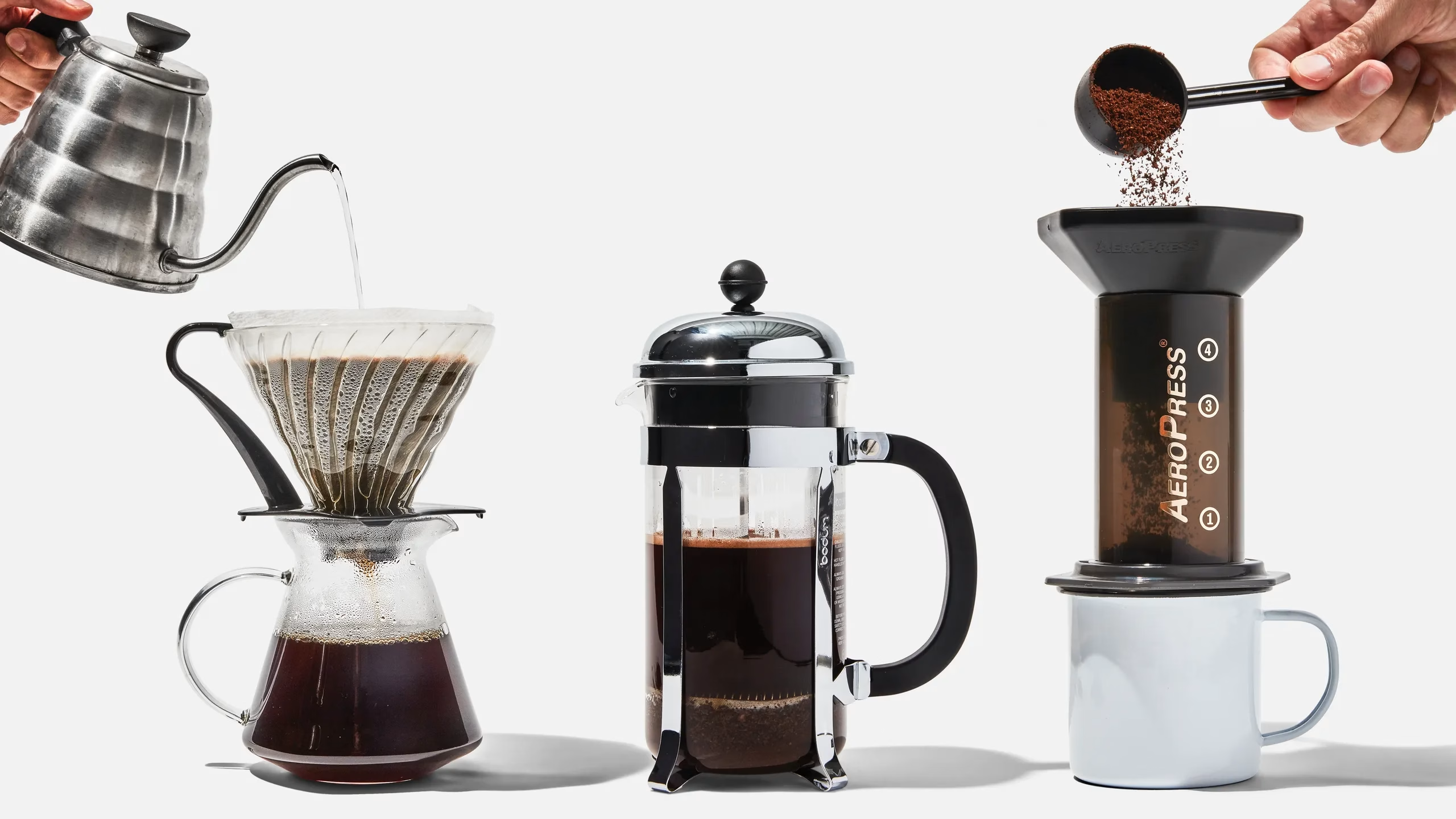
Manual Pour-Over: Exemplified by devices like the Hario V60, Chemex, and Kalita Wave, these methods provide the brewer with precise control over water temperature, flow rate, and grind size, allowing for the extraction of bright, nuanced flavors and high clarity.
Immersion Brewing
In contrast to drip, immersion methods steep coffee grounds directly in hot water for a set period before separation. This approach typically yields a fuller-bodied, richer cup with more suspended solids and oils.
-
French Press (Press Pot): A classic that involves coarse grounds steeped in water, then separated by a plunger with a mesh filter. The result is a bold, heavy-bodied brew.
-
AeroPress: A versatile device that can operate as both an immersion brewer and a pressure brewer, offering a clean, concentrated shot often likened to espresso or a full-bodied filter coffee depending on the technique.
-
Cold Brew: A distinct immersion method where coffee grounds steep in cold water for an extended period, typically 12–24 hours. This low-temperature extraction produces a smooth, low-acid concentrate.
Espresso-Based Methods
Espresso stands alone as a concentrated coffee shot made by forcing hot, pressurized water through finely-ground coffee. It forms the base for countless milk-based drinks and is characterized by its intense flavor and iconic crema.
-
Pump-Driven Espresso Machines: These range from manual and semi-automatic models requiring barista skill to fully automatic and super-automatic machines that handle grinding, tamping, and brewing with the push of a button.
-
Lever Espresso Machines: A more traditional, hands-on approach where the barista manually pulls a lever to generate pressure.
-
Capsule/Pod Espresso Machines: Devices like Nespresso offer unparalleled convenience for single-serve espresso, trading some control for speed and simplicity.
Percolation
Percolation involves repeatedly cycling hot water through coffee grounds, extracting flavor as the water passes.
-
Stovetop Moka Pot (Bialetti): This iconic Italian device uses steam pressure to force hot water upwards through coffee grounds, producing a strong, robust brew that's often compared to espresso in intensity, though technically not true espresso.
-
Electric Percolators: Similar principle to stovetop versions but automated, commonly found in older households.
Boiling Methods
Among the oldest forms of coffee preparation, boiling methods directly heat coffee grounds in water.
-
Turkish Coffee (Cezve/Ibrik): Finely ground coffee is boiled directly in a small pot (cezve or ibrik), resulting in a thick, unfiltered brew with sediment that is meant to settle at the bottom of the cup. Greek coffee follows a similar tradition.
-
Cowboy Coffee: A rugged outdoor method where coarse grounds are simply boiled in a pot, often settling naturally or with a splash of cold water.
Vacuum/Siphon Brewing
The siphon pot is a visually striking method that uses vapor pressure and a vacuum to brew. Water heats in a lower chamber, rises to an upper chamber containing coffee grounds, then draws back down, leaving the brewed coffee. The result is a clean, aromatic cup with a theatrical brewing process.
Pressure Brewing (Non-Espresso)
Beyond traditional espresso, other devices utilize pressure to expedite extraction or create unique profiles. The AeroPress, as mentioned, fits here when used with its plunger to create pressure. Portable pressure brewers like Handpresso also fall into this category, designed for coffee on the go.
The Sheer Scale of Coffee Brewing Techniques
Unique and Regional Offerings
Beyond the mainstream, cultures worldwide have developed distinctive ways to enjoy coffee, further expanding the count:
-
Vietnamese Phin Filter: A slow drip method where coffee brews through a metal filter directly into a cup, often over sweetened condensed milk.
-
South Indian Filter Coffee: Utilizes a specific metal filter to brew a strong coffee, often blended with chicory.
-
Scandinavian Egg Coffee: A curious method where a raw egg is mixed with coffee grounds before brewing, resulting in a remarkably clear and smooth cup.
-
Japanese Iced Coffee: A flash-brewing technique where hot coffee is brewed directly over ice, rapidly chilling it to preserve delicate aromatics.
-
Neapolitan Flip Pot (Cuccumella): A traditional Italian stovetop percolator that flips over to complete the brewing process.
The Impact on Flavor and Expert Perspectives
The choice of brewing method is not merely a matter of convenience; it dramatically affects the final flavor profile, body, and clarity of the coffee. Professional reviewers from outlets like Coffee Review and Sprudge consistently emphasize this. For instance, pour-over methods are celebrated for their ability to highlight a coffee's inherent acidity and clarity, offering a transparent glimpse into its nuanced flavors. French press, conversely, delivers a fuller body and allows more of the coffee's natural oils to remain in the brew, contributing to a richer mouthfeel. Espresso, as the most technically demanding method, requires precise grind, tamp, and pressure but rewards the effort with a concentrated, crema-topped shot that forms the foundation of modern café culture.
James Hoffmann, a former World Barista Champion, and other experts consistently note that no single method is inherently "best." The optimal choice ultimately depends on personal taste preferences, desired strength, and practical considerations like convenience and brew time.
Latest Trends and Market Reactions
Consumer reactions, often vocal on platforms like Reddit's r/Coffee and Twitter/X, reveal ongoing passionate debates about the "best" method. Pour-over and espresso remain highly popular among enthusiasts for their control and depth, while cold brew and single-serve pod machines continue to dominate convenience-focused markets. Intriguingly, the latest consumer surveys (October–November 2025) indicate a significant trend: a 15% year-over-year increase in sales of sustainable and manual methods, specifically manual pour-over and French press devices. This suggests a growing interest in the ritual and control these methods offer, perhaps a counter-balance to the increasing automation. The market is also seeing an explosion of specialty gear, with more affordable grinders, scales, and smart brewers democratizing high-end home coffee preparation.
A Comparative Glance at Major Methods
To illustrate the practical differences, consider the varied characteristics across major methods:
-
Drip Machine: Automated, consistent, 4–8 min brew time, balanced, clean flavor, $30–300 equipment cost.
-
Pour-Over: Manual, precise control, 2–4 min brew time, bright, nuanced flavor, $15–60 equipment cost.
-
French Press: Immersion, full-bodied, 4–6 min brew time, rich, heavy flavor, $15–50 equipment cost.
-
Espresso Machine: High pressure, concentrated, 0.5–1 min brew time, intense, crema flavor, $100–3000+ equipment cost.
-
Moka Pot: Stovetop, pressure, 3–7 min brew time, strong, robust flavor, $20–80 equipment cost.
-
Cold Brew: Long steep, cold water, 12–24 hr brew time, smooth, low acid flavor, $20–50 equipment cost.
-
Turkish/Greek: Boiled, unfiltered, 2–5 min brew time, thick, sediment flavor, $10–40 equipment cost.
-
Siphon: Vacuum, theatrical, 6–10 min brew time, clean, aromatic flavor, $60–300 equipment cost.
-
Capsule/Pod: Single-serve, fast, 1–2 min brew time, convenient, $50–400 equipment cost.
These distinctions highlight how brew time, flavor profiles, and initial investment can vary dramatically, shaping the user experience and the resulting cup.
Conclusion
The world of coffee brewing is a rich tapestry woven from diverse techniques, historical traditions, and cutting-edge innovations. With "dozens" of distinct ways to make coffee, encompassing at least 15–20 globally recognized primary methods and over 30 distinct devices, the choices are vast. From the precise control of a manual pour-over to the ritualistic boiling of Turkish coffee, or the high-pressure intensity of an espresso shot, each method offers a unique experience. Ultimately, the "best" way to make coffee isn't a singular answer but a personal journey, guided by taste, desired convenience, and an appreciation for the intricate science and artistry behind every delicious cup.