
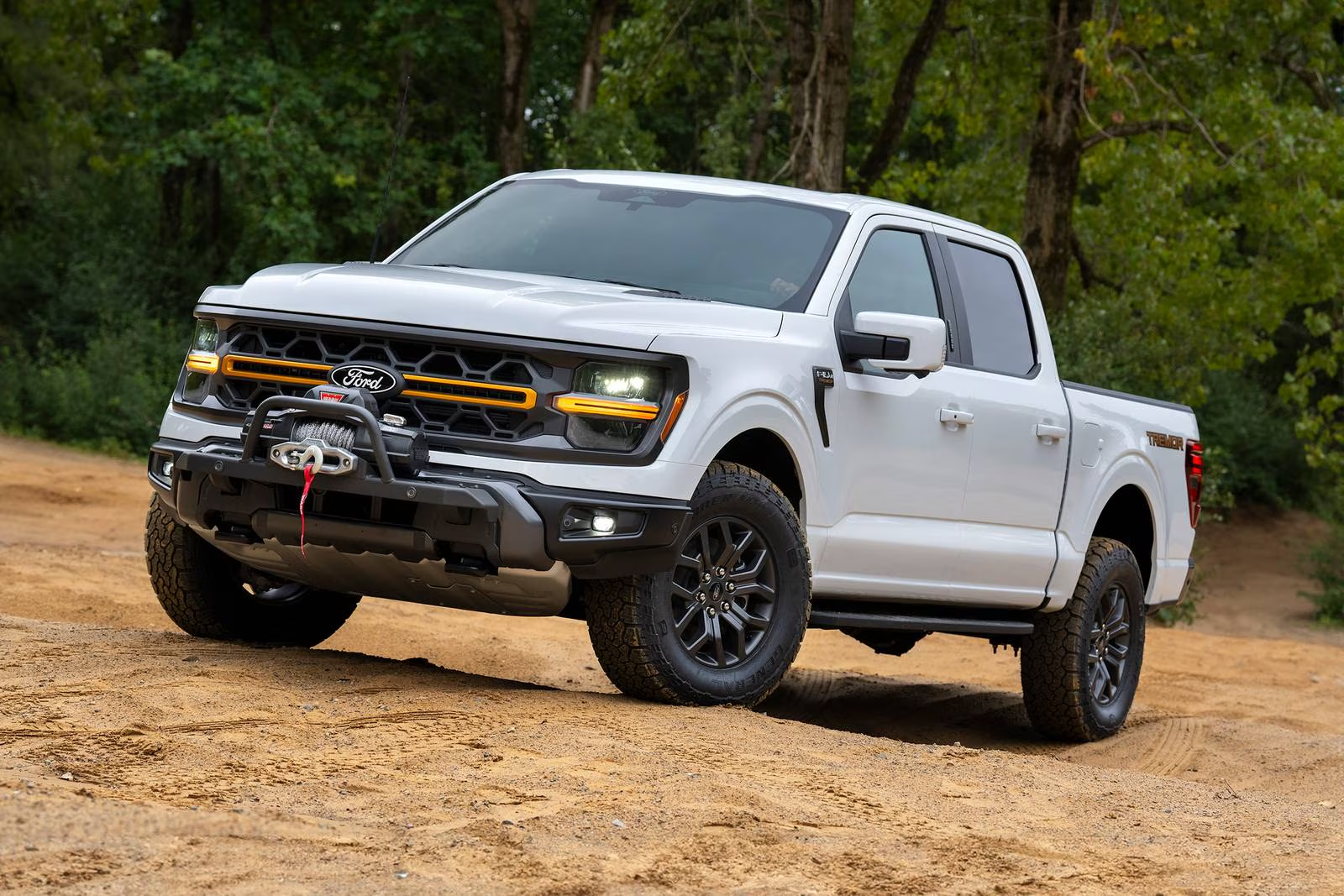
Ford Sued Over Missing "Advanced Trailering Assist" in 2025 Trucks as Software Delays Hit Owners
A class-action lawsuit filed Friday in the U.S. District Court for the Eastern District of Michigan alleges Ford Motor Company sold 2025 truck buyers a bill of goods. The suit claims Ford aggressively marketed its flagship "Advanced Trailering Assist"—a semi-autonomous towing system—since the September launch of the F-150 and F-250, only to deliver vehicles completely devoid of the software.
Reuters broke the news of the legal action on November 29, 2025, confirming that plaintiffs are seeking $5 million in damages. The complaint accuses Ford of violating the Magnuson-Moss Warranty Act by charging customers for functionality that didn't exist when they drove off the lot. While Ford has acknowledged the missing code and promised a fix, the lawsuit contends that selling future promises as present features constitutes false advertising.
The "Bait-and-Switch" Accusation
The filing specifically targets the gap between Ford’s glossy dealership brochures and the dashboard reality for roughly 45,000 new owners. According to the complaint, plaintiffs paid premiums—up to $2,000 in some trim packages—specifically to acquire the Level 2 autonomous system.
Designed to automate trailer hitching, backing, and stability control via AI-driven cameras, the Advanced Trailering Assist was the 2025 lineup's killer app. Ford pitched it as a massive leap forward, claiming 20% better accuracy in low-visibility conditions. The suit argues that because a "minor certification delay" with chip supplier Qualcomm prevented the software from being ready, Ford essentially delivered incomplete hardware.
Consumer Reports downgraded the issue to a "moderate severity" advertising misstep on November 29, noting the trucks still drive and tow manually without safety risks. However, in a market where computing power matters as much as horsepower, a missing feature isn't just an annoyance—it's a breach of contract.
Ford's Response: OTA Updates Incoming
Ford scrambled to control the narrative over the weekend. On November 30, the automaker issued a technical bulletin promising the missing code would arrive via an over-the-air (OTA) update by December 15, 2025.
CEO Jim Farley addressed the controversy directly on X and Ford’s corporate site. "This feature was advertised based on our development timeline, but supply chain issues with chip suppliers delayed certification," Farley wrote. He attempted to sweeten the waiting period by offering affected owners a complimentary three-month extension on FordPass premium services.
The automaker stresses this is strictly a software bottleneck, differentiating it from the hardware recalls that dogged the 2023 Bronco. Morningstar analysts project the financial hit will hover between $50-75 million—manageable compared to a physical recall, but costly in terms of reputation.
The "Ship Now, Patch Later" Trap
This lawsuit exposes the danger of legacy automakers borrowing the Silicon Valley playbook. While Tesla has trained its buyers to accept "beta" features and later patches, Ford’s core demographic is far less forgiving of vaporware. When a customer buys a heavy-duty truck for work, they expect the spec sheet to match the capability on day one.
The friction is evident in the numbers. A Consumer Reports survey released November 30 indicates 68% of 2025 F-150 owners consider the missing tech a "major disappointment." J.D. Power tracked an immediate five-point dip in initial satisfaction scores for the new lineup within days of the news breaking.
Owners haven't been shy about voicing their anger. On the F150Gen14 forums, users described the missing feature as "deceptive," with threads filling up with complaints from rural buyers. Sales data shows nearly 60% of affected units sit in Texas, Michigan, and California—regions where towing isn't a hobby, but a requirement. Farmers and contractors posting online noted they specifically bought the 2025 model for the harvest and holiday season, only to find the "efficiency" they paid for was currently just dead code.
While the National Highway Traffic Safety Administration (NHTSA) is reviewing the incident for regulatory breaches, no formal investigation is underway. The Better Business Bureau, however, flagged a 15% spike in auto-related complaints this year, signaling that the industry-wide habit of selling "coming soon" features on $80,000 trucks is rapidly losing its novelty.