
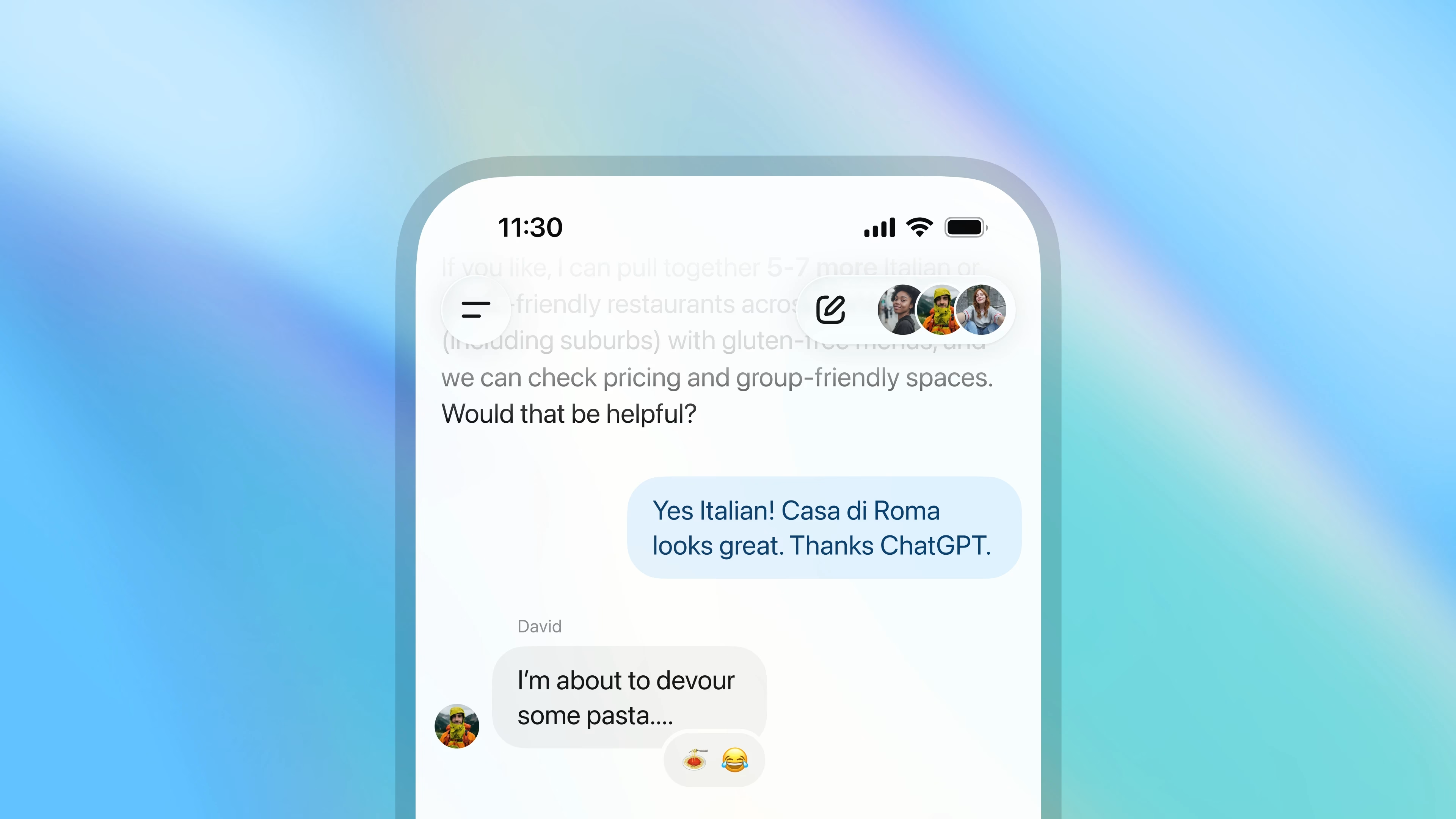
Unlocking Collaborative AI: Your Guide to OpenAI's New ChatGPT Group Chats
OpenAI has officially begun piloting a groundbreaking "group chats" feature within ChatGPT, fundamentally shifting how we can collaborate with artificial intelligence. As of November 15, 2025, this new functionality is rolling out in select regions, marking a significant evolution from individual AI interactions to a truly shared experience. Imagine leveraging ChatGPT's capabilities not just for yourself, but for your entire team, family, or group of friends, all within a single, dynamic conversation. This guide will walk you through understanding, accessing, and effectively utilizing this transformative new feature.
Understanding OpenAI's Collaborative AI Evolution
This isn't just about adding more users to a chat; it's about embedding AI as an active, collaborative participant. OpenAI describes this pilot program as a "new way to collaborate with friends, family, or coworkers and ChatGPT in the same conversation." It’s designed to facilitate shared discussions, brainstorming, research, and planning, directly addressing the growing need for more dynamic, multi-user AI applications.
The rollout commenced on November 14, 2025, and is currently in an early testing phase. This move builds upon earlier 2025 features, such as "Shared Projects," which offered collaborative chat and file sharing but were largely individual-invite based. Group chats take this a step further, enabling real-time, multi-user interactions that promise a more integrated and social AI experience. For now, the pilot is specifically available in four countries: Japan, New Zealand, South Korea, and Taiwan. If you're in one of these regions, you're in luck! This feature is being rolled out across all user tiers: Free, Go, Plus, and Pro plans, making it accessible to a wide audience. And yes, it’s available on both mobile platforms (iOS and Android, requiring the latest app versions) and the web.
Getting Started: Prerequisites for ChatGPT Group Chats
Before you can dive into collaborative AI magic, there are a few prerequisites to check off. Ensuring you meet these will make the setup process smooth and straightforward.
-
Geographic Availability: As mentioned, the feature is piloting exclusively in Japan, New Zealand, South Korea, and Taiwan. You'll need to be physically located in one of these countries to access it. OpenAI is gathering feedback from these diverse user bases before any potential wider expansion.
-
Latest ChatGPT Version: Whether you're a mobile user or prefer the web interface, make sure your ChatGPT platform is up-to-date.
-
Mobile: For iOS and Android users, ensure you have the very latest version of the ChatGPT app installed. Head to your device's app store (App Store for iOS, Google Play Store for Android) and check for updates.
-
Web: If you primarily use ChatGPT via a web browser, simply navigate to the official OpenAI ChatGPT website. The feature should automatically appear if your account is enabled and you're in a pilot region.
- OpenAI Account: You’ll need an active OpenAI account. As the feature is available across all plan tiers—Free, Go, Plus, and Pro—most existing users should have access provided they meet the other criteria.
Meeting these conditions is critical. Without them, you might not see the group chat option, and we don't want that!
A Step-by-Step Guide to Initiating a ChatGPT Group Chat
Once you’ve confirmed you meet the prerequisites, setting up a group chat with ChatGPT is surprisingly intuitive. Let’s walk through the process.
-
Access ChatGPT: Open your ChatGPT application on your mobile device or navigate to the ChatGPT website in your browser.
-
Look for the Group Chat Option: On the main chat interface, you should notice an option related to starting a "New Chat" or an "Invite" feature, possibly indicating a collaborative or group functionality. OpenAI's UI updates often highlight new features, so keep an eye out for prompts or icons.
-
Initiate a New Group Conversation: Select the appropriate option to start a new chat, then look for a prompt to add multiple participants or specifically create a "group chat." This is where you’ll begin crafting your shared AI experience.
-
Invite Your Collaborators: You’ll be prompted to invite others to the chat. This could be friends, family members, or colleagues. You'll typically do this by sharing a link or inviting them via their OpenAI account details. Remember, anyone you invite must also be in one of the pilot regions to participate.
-
ChatGPT Joins as an AI Participant: Crucially, ChatGPT isn't just a tool for the group; it is a member of the group. Once your group chat is established, ChatGPT will be an active AI collaborator, ready to engage with everyone's inputs.
-
Start Collaborating: Now, the real fun begins! You can collectively task ChatGPT with research, brainstorm ideas, plan events, or ask group queries in real-time. The platform supports shared files and custom instructions, allowing for a truly integrated workflow.
It's a straightforward process, but getting everyone on board from the right regions and with updated apps is the key.
Maximizing Collaboration: Practical Applications and Unique Advantages
The power of ChatGPT group chats lies in its ability to transform how groups interact with AI. This isn't just a novelty; it’s a powerful tool with diverse applications, leveraging the latest advancements in AI.
-
Brainstorming creative projects with coworkers, letting ChatGPT offer instant feedback and generate new ideas.
-
Planning a family vacation, where the AI can research destinations, compare prices, and even draft itineraries based on collective input.
-
Facilitating educational studies, with students and ChatGPT working together on complex assignments or learning new concepts.
-
Enjoying casual social interactions, like collaborative storytelling or trivia nights, where ChatGPT can act as the host or a knowledgeable team member.
The group chat feature is built upon recent updates like GPT-5.1, rolled out in November 2025, which significantly enhances conversational reliability and reasoning. Furthermore, it integrates with "agent mode" (previewed in October 2025), reducing response latency by allowing the AI to take actions like researching while users browse or input. OpenAI has also incorporated safeguards for sensitive topics, building on October 2025's mental health response improvements, which reduced shortcomings by 65-80%. This ensures a safer and more reliable collaborative environment.
The regional focus for the pilot – Japan, New Zealand, South Korea, and Taiwan – isn't arbitrary. These markets offer diverse user bases and varied regulatory environments, crucial for testing localization, such as language support. High AI adoption rates in countries like South Korea and Japan make them ideal testbeds for advanced collaboration tools.
Navigating Early Adoption: Feedback and the Road Ahead
As with any cutting-edge technology, the initial rollout of ChatGPT group chats has generated significant community buzz and valuable early feedback. Reactions on platforms like X and Reddit have been largely positive, with users expressing excitement for the practical applications, often exclaiming things like, "Finally, AI that feels like a team member!" This enthusiasm highlights the clear demand for more integrated, social AI tools.
However, early adoption also brings to light areas for refinement. Some users have voiced concerns regarding privacy, particularly how shared data within group settings will be handled. There have also been a few reports of minor bugs, such as delayed responses in multi-user chats, though these are typical for a pilot phase. OpenAI is actively monitoring adoption and user feedback to "guide what comes next," indicating that improvements and expansions are likely. The pilot phase is estimated to last 4-6 weeks, providing ample time for the company to gather crucial data.
While there's no official U.S. or EU rollout yet, likely due to stricter regulations, the success of this pilot in Asia-Pacific regions could pave the way for future global expansion. Analyst reports from Forrester suggest that these multi-party dynamics could evolve significantly, potentially leading to robust enterprise-level collaboration tools. The journey of ChatGPT group chats has just begun, and its evolution will undoubtedly be shaped by the users who embrace it today.